
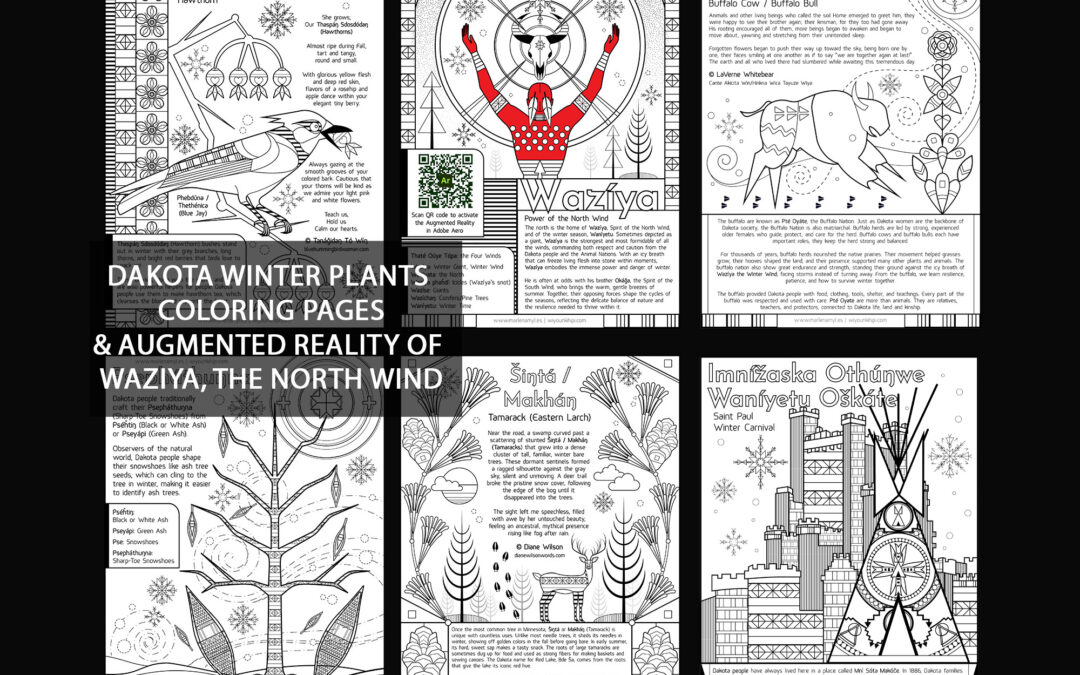
These coloring pages were created by Spirit Lake Dakota artist Marlena Myles to celebrate winter! You are free to download for personal/classroom/educational events use only. These come with an augmented reality component that you can activate anyplace to visit with Waziya, the Dakota Spirit of the North Wind!
Two of the coloring pages feature writing by Dakota authors Tanagidantowin/Blue Hummingbird Woman (Tara Perron) and Diane Wilson. Audio pronunciation guide will be added soon.
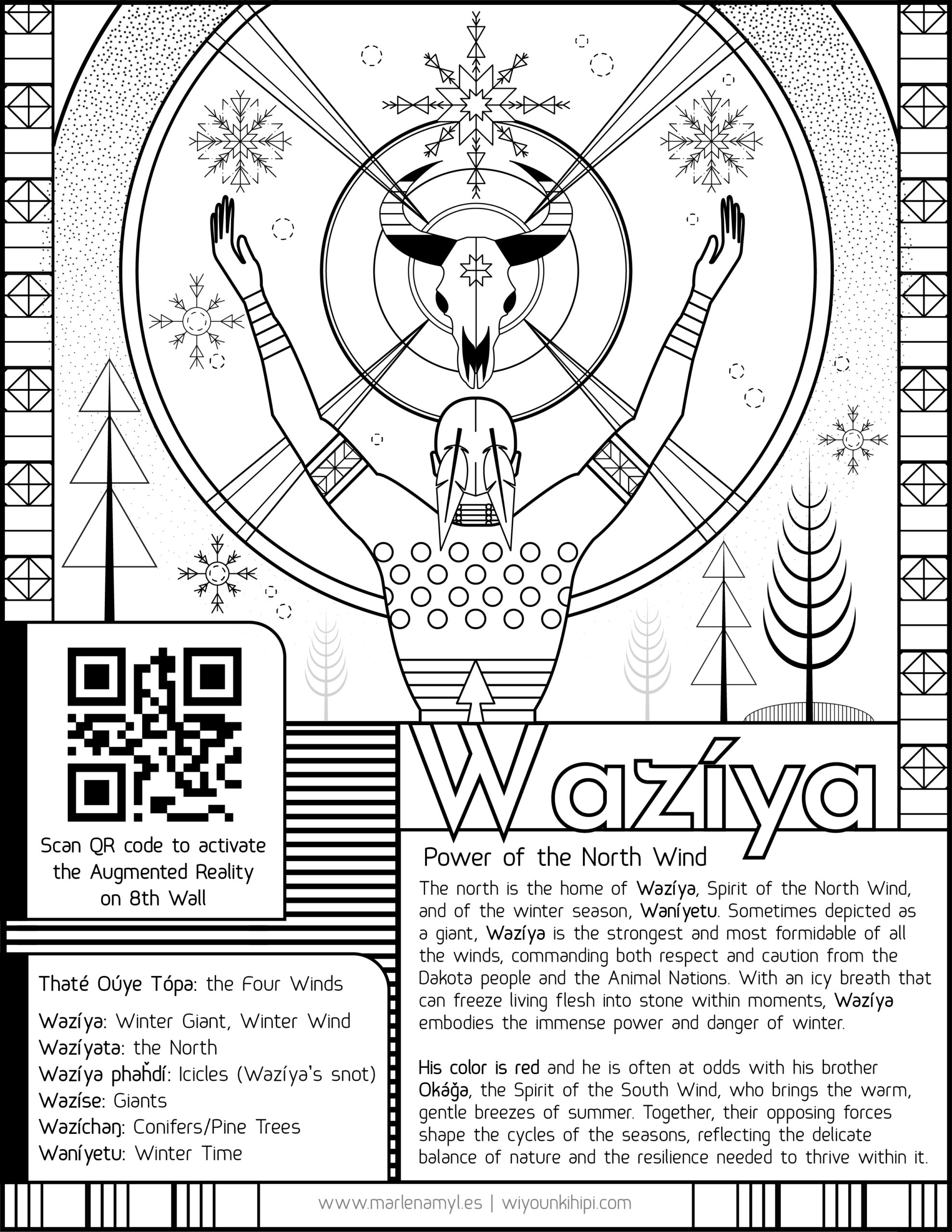
Wazíya, the Power of the North Wind
The north is the home of Wazíya, Spirit of the North Wind, and of the winter season, Waníyetu. Sometimes depicted as a giant, Wazíya is the strongest and most formidable of all the winds, commanding both respect and caution from the Dakota people and the Animal Nations. With an icy breath that can freeze living flesh into stone within moments, Wazíya embodies the immense power and danger of winter.
He is represented by the color red and he is often at odds with his brother Okáǧa, the Spirit of the South Wind, who brings the warm, gentle breezes of summer. Together, their opposing forces shape the cycles of the seasons, reflecting the delicate balance of nature and the resilience needed to thrive within it.

Meet Wazíya in augmented reality
Watch the video or read below to activate this augmented reality (AR) experience using 8th Wall:
- Scan the QR Code or Click Link: Use your device’s camera to scan the provided QR code associated with the AR experience or click this link if you are viewing this on your phone.
- Launch the Experience via your web browser.
- Tap the screen to place Waziya and you’re done! Interact!


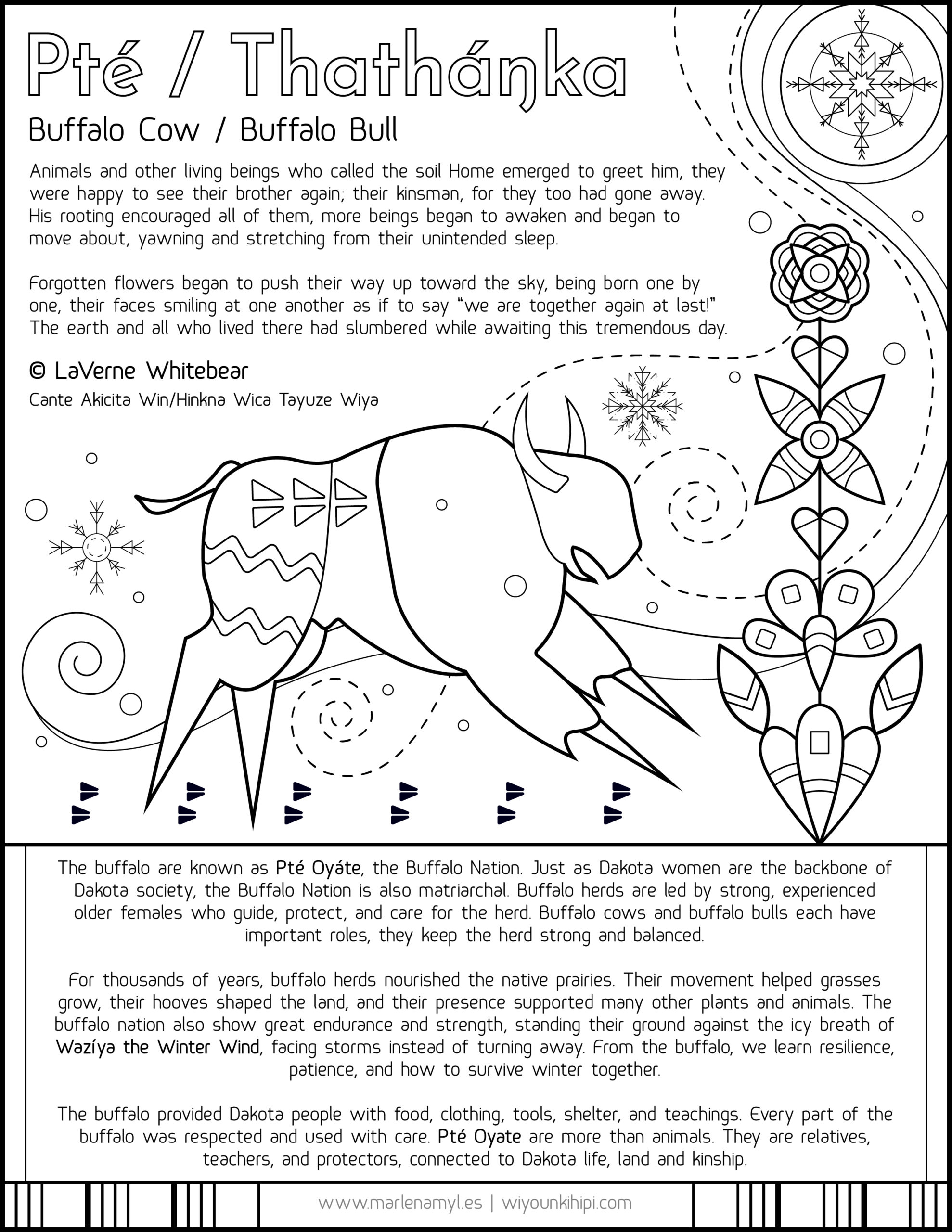
Pté / Thatháŋka
The buffalo are known as Pté Oyáte, the Buffalo Nation. Just as Dakota women are the backbone of Dakota society, the Buffalo Nation is also matriarchal. Buffalo herds are led by strong, experienced older females who guide, protect, and care for the herd. Buffalo cows and buffalo bulls each have important roles, they keep the herd strong and balanced.
For thousands of years, buffalo herds nourished the native prairies. Their movement helped grasses grow, their hooves shaped the land, and their presence supported many other plants and animals. The buffalo nation also show great endurance and strength, standing their ground against the icy breath of Wazíya the Winter Wind, facing storms instead of turning away. From the buffalo, we learn resilience, patience, and how to survive winter together.
The buffalo provided Dakota people with food, clothing, tools, shelter, and teachings. Every part of the buffalo was respected and used with care. Pté Oyate are more than animals. They are relatives, teachers, and protectors, connected to Dakota life, land and kinship.
This coloring page features creative writing by LaVerne Whitebear.
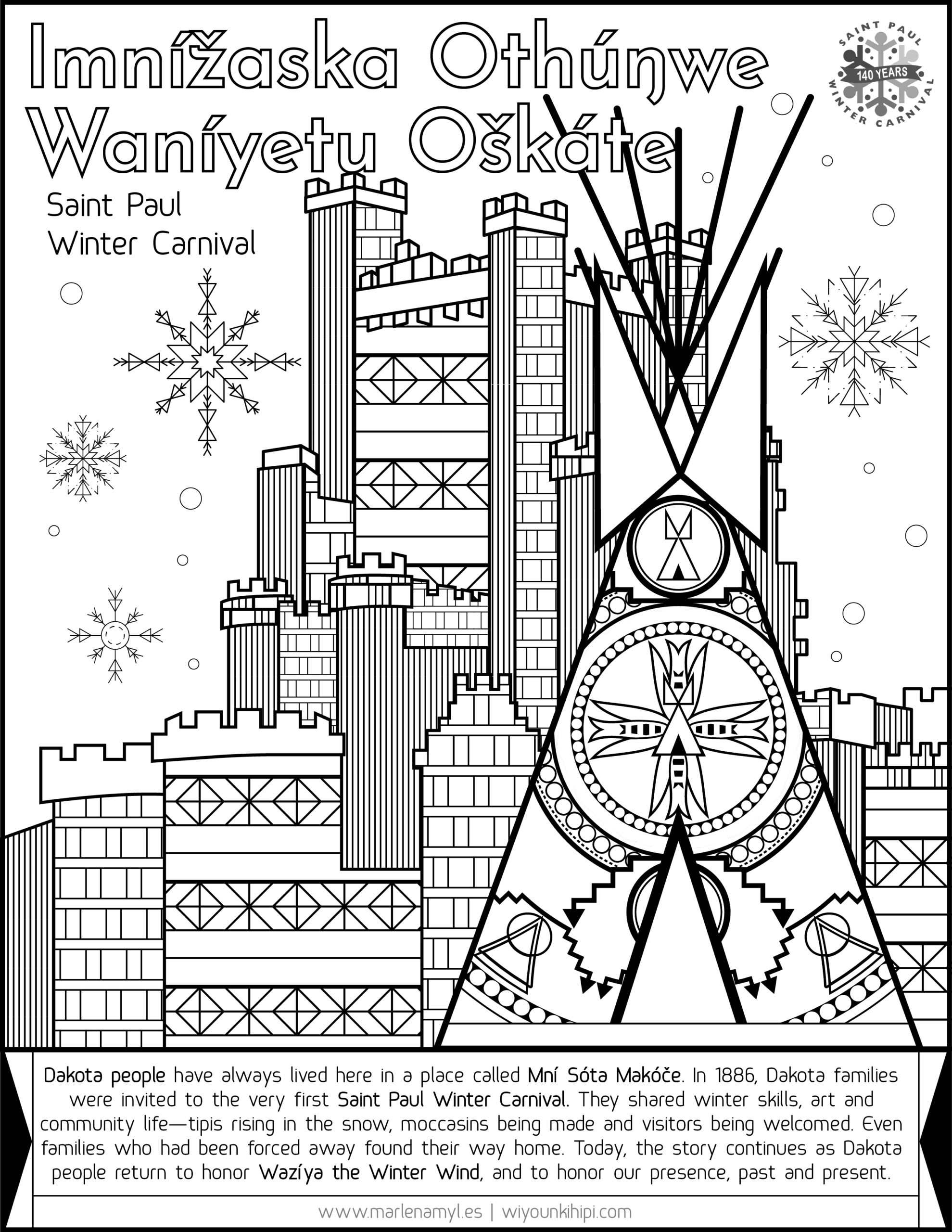
Imnížaska Othúŋwe Waníyetu Oškáte /
Saint Paul Winter Carnival
Dakota people have always lived here, in a place called Mni Sota Makoce.
In 1886, Dakota families were invited to the very first Saint Paul Winter Carnival.
They came back again in 1887, 1888, and 1896.
They shared winter skills, art, and community life.
Tipis rose in the snow, moccasins were made, and visitors were welcomed.
Even families who had been forced away found their way home.
In 1896, Dakota families from Spirit Lake traveled by train back to Minnesota.
Today, the story continues.
We return to honor Waziya, the Winter Wind, and to say clearly: we are still here.

Hawthorn
Thaspáŋ Sdosdódaŋ (Hawthorn) bushes stand out in winter with their grey branches, long thorns, and bright red berries that birds love to snack on!
These berries, along with the stems and leaves, are also powerful helpers for people. Dakota people use them to make hawthorn tea, which cleanses the blood and supports the heart.
This coloring page features a poem written by Tanagidantowin/Blue Hummingbird Woman (Tara Perron).

Ash trees
Dakota people traditionally craft their Psepháthuŋna (Sharp-Toe Snowshoes) from Pséȟtiŋ (Black or White Ash) or Pseyápi (Green Ash).
Observers of the natural world, Dakota people shape their snowshoes like ash tree seeds, which can cling to the tree in winter, making it easier to identify ash trees.

Tamarack
Once the most common tree in Minnesota, Šiŋtá or Makháŋ (Tamarack) is unique with countless uses. Unlike most needle trees, it sheds its needles in winter, showing off golden colors in the fall before going bare. In early summer, its hard, sweet sap makes a tasty snack. The roots of large tamaracks are sometimes dug up for food and used as strong fibers for making baskets and sewing canoes. The Dakota name for Red Lake, Bde Ša, comes from the roots that give the lake its iconic red hue.
Šiŋtá or Makháŋ is also highly valued for its medicinal properties. The inner bark helps heal burns and wounds, while boiled and crushed leaves and bark are used as an herbal steam to ease headaches and backaches. Its needles can be brewed into tea during cold season to aid digestion and overall wellness.
This coloring page features writing by Diane Wilson.
Chi Miigwech